Key Takeaways
- Ash Wood Brittleness: Unlike other species, Ash trees lose internal moisture rapidly once dead, making them prone to shattering.
- The 30% Rule: If an Ash tree has lost more than 30% of its canopy to the borer, it is generally considered too far gone to save.
- Bark Blondeing: Significant woodpecker activity on the trunk is a definitive sign of a heavy Emerald Ash Borer infestation.
- Liability and Safety: Dead Ash trees are unpredictable and should never be climbed by amateurs; they often require crane-assisted removal.
- Proactive Treatment: Systemic trunk injections can save healthy Ash trees if applied before the borer destroys the vascular system.
If you live in Union, New Jersey, or the surrounding areas of Essex and Morris counties, you have likely noticed a disturbing trend in your neighborhood: the sudden and skeletal decline of the Ash tree. The culprit is the Emerald Ash Borer (EAB), a small, metallic-green beetle that has systematically decimated millions of trees across North America. In 2026, the situation in Union has reached a critical tipping point. This is no longer just a forestry problem; it is a serious residential safety concern.
What makes the Emerald Ash Borer particularly terrifying for homeowners is not just that it kills the tree, but how it kills it. Unlike an Oak or a Maple that might stand dead and sturdy for years, an Ash tree becomes a structural liability almost immediately after it dies. To protect your family and your property, you must understand the biology of this pest and the physical changes it forces upon the wood of your trees.
The Biology of a Silent Killer
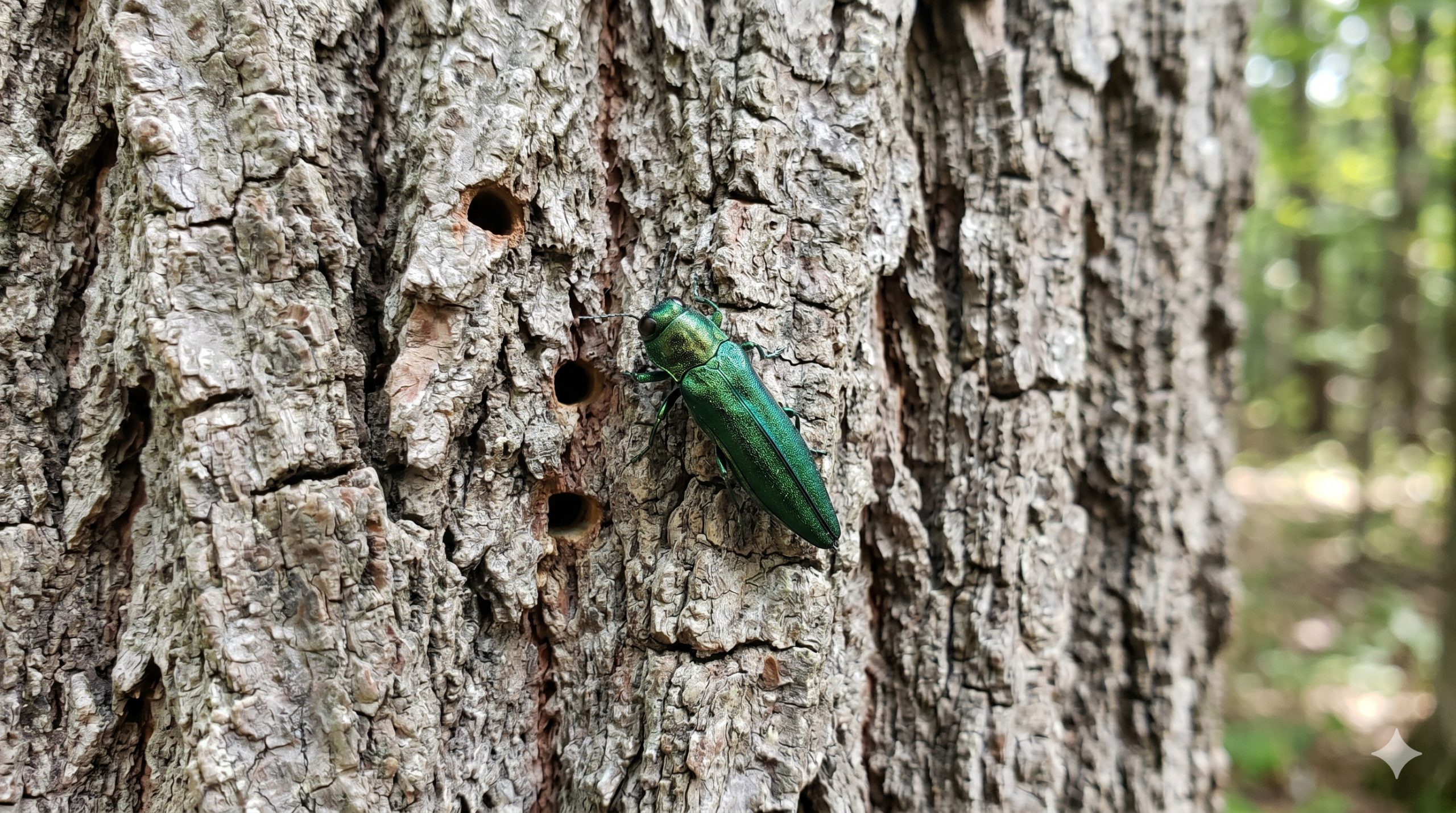
The Emerald Ash Borer does its damage beneath the surface, where it remains invisible until the destruction is nearly complete. While the adult beetles nibble on leaves, it is the larvae that commit the murder. After hatching from eggs laid in bark crevices, the larvae bore into the phloem, the thin layer of tissue just under the bark that transports water and nutrients between the roots and the leaves.
As they feed, they create S-shaped tunnels known as galleries. These galleries effectively girdle the tree, cutting off its circulation. In Union, where Ash trees have historically been a staple of the urban forest, this mass girdling has led to a landscape filled with trees that are alive at the bottom but completely dead at the top. This phenomenon is often the first visible sign of an infestation, known as canopy dieback. Because the tree is being choked from the inside, the leaves at the very top of the tree are the first to starve and wither
Why do Ash Trees Become Brittle So Quickly?
The rapid decline of an Ash tree once infested by the Emerald Ash Borer is a result of specific biological and structural changes:
- The Glass Tree Phenomenon: Dead Ash trees are known as glass trees because they lose all elasticity. Unlike other hardwoods that bend under pressure, Ash wood becomes so brittle that it shatters upon impact or stress.
- Lack of Natural Preservatives: Unlike White Oak or Black Locust, Ash wood lacks high concentrations of rot-resistant tannins and natural oils. These substances usually help maintain some level of flexibility in the wood fibers even after a tree dies.
- Vascular Interruption: Once the Emerald Ash Borer larvae sever the phloem and xylem (the tree’s circulatory system), the transport of water and nutrients is completely neutralized, leading to immediate internal starvation.
- Catastrophic Dehydration: Without a constant water supply, the wood undergoes rapid desiccation. This causes the long, supple cellulose fibers to shrink, becoming incredibly short, dry, and rigid, similar to the difference between a flexible green twig and a dry, snapping cracker.
- Sudden Limb Drop: Because the dried wood can no longer support its own massive weight, large limbs can shatter and fall without any external triggers like wind, ice, or snow. This makes them unpredictable “ticking time bombs” on your property.
- Clean Failure Points: The failure usually occurs at the branch crotch or the base of the trunk. Because the fibers are so dry, they snap clean rather than tearing or hanging by the bark, sending heavy debris plummeting to the ground instantly.
- Exponential Risk Increase: Once an Ash tree has been dead for a year, its structural integrity is almost entirely gone. The risk of total collapse under the weight of light snow or heavy rain increases to a critical level, making immediate removal necessary.
Identifying the Warning Signs on Your Union Property
You do not need to be a scientist to spot an Ash tree in trouble. Several physical markers indicate the Emerald Ash Borer has moved in.
1. Bark Blondeing
One of the most obvious signs is bark blondeing. Woodpeckers love EAB larvae. As they hunt for the bugs, they strip away the outer layer of dark bark, revealing the lighter, tan-colored inner bark. If your Ash tree looks like it has light-colored patches or looks shredded, it is likely infested with hundreds of larvae. This activity is usually most intense in the upper canopy first before moving down the trunk.
2. D-Shaped Exit Holes
When the larvae mature into adult beetles, they chew their way out of the tree. They leave behind a very specific exit hole shaped like a capital letter D. These holes are tiny, only about 1/8 of an inch, but they are a definitive fingerprint of the pest. If you see these holes at eye level, it means the infestation is already extremely advanced, as the insects typically work from the top of the tree downward.
3. Epicormic Sprouting
When a tree is under extreme stress because its top is dying, it will try one last desperate move to survive. It will sprout new, leafy growth from the base of the trunk or the lower branches. These are known as water sprouts or epicormic shoots. If you see a tree with a dead top but a bushy bottom, it is a sign that the EAB has already caused significant vascular damage. This is the tree’s final attempt to photosynthesize because the upper leaves are no longer receiving water.
The Dangers of DIY Ash Removal
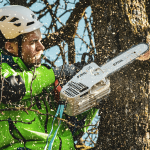
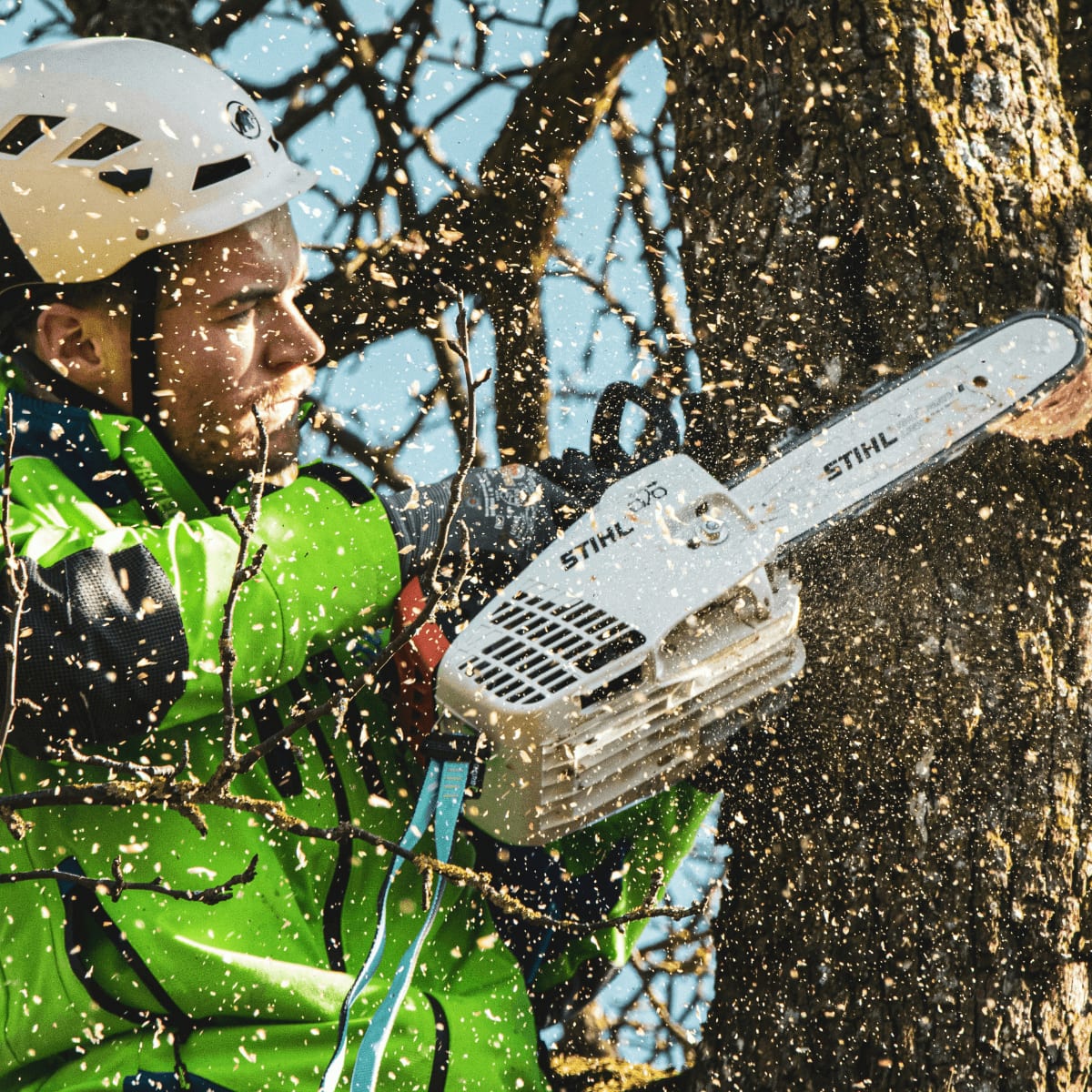
Because of the brittleness mentioned earlier, Ash trees are some of the most dangerous trees to remove. In the past, a climber might use ropes and saddles to scale a dead tree and cut it down piece by piece. With an EAB-infested Ash, this is often impossible. The wood is so unpredictable that it may not support the weight of a climber or even the vibrations of a chainsaw.
Protecting your Union property from the Emerald Ash Borer requires specialized expertise to manage the unique risks of brittle, dehydrated wood. New Jersey Tree Professional in Union NJ brings over 40 years of combined experience to identify and remove hazardous Ash trees safely. Our qualified arborists use crane-assisted removal techniques to eliminate the risk of glass trees shattering, a critical safety measure that DIY methods cannot provide. We offer 24/7 emergency response for storm-damaged limbs and provide a No-Surprise Guarantee so the price we quote is always the price you pay. As a local, family-owned business, we handle all Township permitting and offer dedicated discounts to seniors, veterans, and first responders. Whether you need a health assessment to save a tree or a complex removal near power lines, we deliver reliable, eco-friendly solutions.
Don’t wait for a brittle limb to fail; Call New Jersey Tree Professional at (908) 866-8894 for a free, no-pressure estimate.
Frequently Asked Questions
Can an Ash tree be saved once it is infested?
If the tree has lost less than 30% of its canopy, systemic trunk injections can often stop the borer and allow the tree to recover. Once it passes that 30% threshold, the vascular damage is usually too severe to reverse.
How much does it cost to treat an Ash tree?
Treatments are typically priced by the inch of the tree’s diameter. While there is an ongoing cost every two years, it is often much cheaper than the several thousand dollars required for a large, complex removal.
Will the Emerald Ash Borer go away on its own?
No. Without human intervention or the death of every Ash tree in the area, the borer will continue to spread. It has no significant natural predators in New Jersey to keep the population in check.
Is Ash wood safe to use as firewood?
Yes, but with a major catch: do not move the wood. Moving firewood is the primary way the borer spreads to new counties. Burn it where you cut it.
Why is my Ash tree losing its bark in big chunks?
This is often caused by the larvae’s galleries physically separating the bark from the wood. Once the bark falls off, the wood underneath dries out even faster, increasing the risk of breakage.
Are there any Ash species that are resistant?
Most native North American Ash trees (Green, White, Black, and Blue) are highly susceptible. Some Asian varieties have shown resistance, but they are not common in Union landscapes.
What should I plant to replace my Ash tree?
Diverse species like Swamp White Oak, Ginkgo, or Hackberry are great alternatives that provide shade without being susceptible to the borer.
Does homeowners’ insurance cover the removal of a dead Ash tree?
Usually, no. Insurance typically only pays if the tree falls and hits a covered structure. Removing a standing dead tree is considered preventative maintenance and is the owner’s responsibility.
Summary Checklist: Ash Tree Health & Risk Level
| Condition | Risk Level | Recommended Action |
| Visible D-Shaped Holes | Moderate | Schedule an arborist evaluation to determine if injections are viable. |
| Bark Blondeing (Woodpecker Signs) | High | Significant infestation; plan for immediate treatment or removal. |
| 30% + Canopy Dieback | Critical | The tree is likely too brittle to save; schedule crane-assisted removal. |
| Epicormic Sprouting (Base Shoots) | High | Vascular system is failing; tree is a major structural hazard. |
| Cracks in Trunk or Major Limbs | Critical | Structurally compromised; call for emergency removal before failure. |
Final Advice
Living with Ash trees in Union in 2026 requires a rational and proactive approach to property management. The Emerald Ash Borer is no longer a potential threat; it is a current reality that has fundamentally changed the safety profile of our local landscapes. If you have an Ash tree on your property, you cannot afford to wait and see. A dead Ash tree does not degrade slowly; it becomes a brittle, unpredictable hazard that can shatter during a light wind or even under its own weight.
The most comprehensive way to protect your home and avoid the liability of a falling tree is to secure a reliable tree service in Union, NJ to perform a professional health assessment now. If the tree is healthy, protect it with proven systemic treatments. If it is showing signs of decline, arrange for a professional removal while the wood still has enough structural integrity to be handled safely. Taking action today is the only way to ensure your trees remain an asset rather than a dangerous liability.
Reviewed by a Certified Arborist
This horticultural analysis has been reviewed to ensure all information regarding tree biology and storm safety meets industry standards.