September 16, 2026
Key Takeaways
- Drought can stress trees even in a region that normally receives regular rainfall, particularly during extended dry periods combined with high temperatures.
- Wilting, leaf scorch, premature leaf drop, sparse foliage, and reduced new growth can indicate that a tree is struggling with insufficient soil moisture.
- Young and recently planted trees generally need closer attention because their root systems have not yet developed enough to access deeper soil moisture.
- Deep, slow watering is generally more useful than frequent shallow watering because it encourages moisture deeper into the tree’s root zone.
- Drought-stressed trees can become more vulnerable to insects, disease, and other environmental stresses, making early intervention worthwhile.
Union County, NJ homeowners may not immediately associate drought with tree problems. New Jersey receives regular precipitation throughout the year, but rainfall does not always arrive when trees need it. A stretch of hot weather with little rain can quickly reduce available soil moisture, particularly around homes where pavement, compacted soil, and limited planting areas restrict root growth. Current federal drought monitoring also shows how quickly conditions can change in Union County.
Trees often respond to drought gradually. The first signs may look minor, such as leaves drooping during the afternoon or a canopy appearing slightly thinner than usual. As dry conditions continue, however, water shortages can affect roots, foliage, growth, and the tree’s ability to defend itself against secondary problems.
Why Drought Can Stress Trees in Union County, NJ
Trees depend on available soil moisture to support photosynthesis, nutrient movement, cell function, and normal growth. When the soil surrounding the roots becomes too dry, the tree cannot replace the water it loses through its leaves. Urban and suburban conditions can make this problem worse. Trees growing beside driveways, sidewalks, patios, roads, or buildings may have less usable soil than trees growing in open woodland. Compacted soil can also restrict root development and reduce the amount of water that reaches the root zone.
Newly planted trees face particular challenges because their root systems have not yet expanded into the surrounding soil. Research and extension guidance on drought-stressed urban trees also identifies soil quality, compaction, and nearby impervious surfaces as important factors influencing drought stress.
Signs a Tree Is Struggling With Drought
Drought stress can develop before serious decline becomes obvious. Watching for changes in foliage and growth gives homeowners an opportunity to respond before prolonged moisture loss causes more significant damage.
Wilting or Drooping Leaves
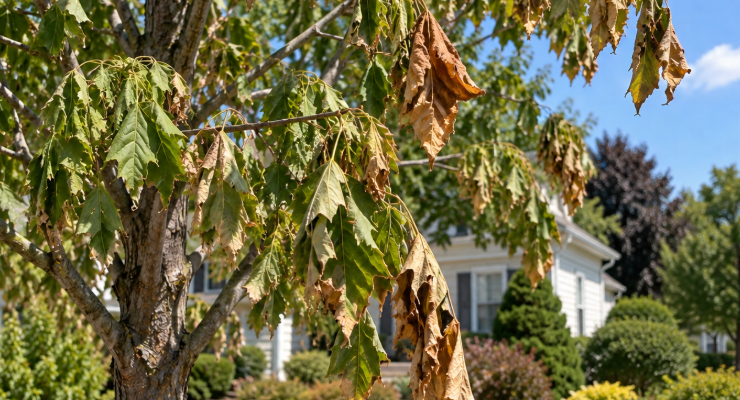
Wilting is one of the easiest symptoms to notice. Leaves may droop during particularly hot afternoons as the tree attempts to conserve water. Temporary afternoon wilting does not always mean a tree is in serious trouble, but leaves that remain wilted into the evening deserve closer attention.
Leaf Scorch
Brown or yellow leaf margins can indicate that the tree is struggling to move enough water to its foliage. Scorched leaves may appear dry around the edges and eventually develop larger areas of browning. Drought stress is not the only possible cause of leaf scorch, so homeowners should avoid assuming that every brown leaf results from insufficient watering.
Premature Leaf Drop
Trees under prolonged water stress may shed leaves earlier than expected. This response reduces the amount of foliage the tree must support and can help conserve remaining moisture. Unexpected leaf drop during summer or another period of active growth deserves attention, particularly when it appears alongside wilting, scorch, or reduced growth.
Sparse or Smaller Foliage
A drought-stressed tree may produce less new growth and smaller leaves. The canopy can gradually become thinner compared with previous years. This symptom becomes easier to identify when homeowners compare the tree with photographs from previous growing seasons.
Dead Branch Tips
Long periods of drought can contribute to dieback in outer branches and shoots. Dead tips do not automatically prove drought caused the problem, but they can indicate that the tree has experienced significant or repeated stress.
Increased Pest or Disease Problems
Water-stressed trees may have fewer resources available for normal defence and recovery. A tree that begins showing pest activity or disease symptoms after an extended dry period may need a broader health assessment rather than simply more water.
Which Trees Need the Most Attention?
Not every tree responds to drought in exactly the same way. Species, age, soil conditions, root development, exposure, and overall health all influence how a tree handles dry weather. Newly planted trees should receive particular attention. Their root systems remain relatively limited, so they cannot rely on the same soil volume available to established trees.
Trees growing in restricted planting areas also deserve monitoring. A mature tree surrounded by pavement may have fewer opportunities to access moisture than one growing in an open lawn or woodland setting. Trees already weakened by previous injury, construction damage, disease, or root disturbance may also have less capacity to tolerate another period of environmental stress.
How to Protect Trees During a Dry Period
Good drought management focuses on maintaining usable soil moisture without creating new problems through excessive watering.
Water Slowly and Deeply
Deep watering is generally more useful than applying small amounts of water frequently. Slow application allows moisture to move deeper into the soil rather than remaining concentrated near the surface. Water should reach the tree’s active root zone without creating prolonged saturation. The appropriate amount and frequency depend on tree size, species, soil conditions, rainfall, and temperature.
Check the Soil Before Watering
Do not rely only on the appearance of the leaves. Check the soil around the root zone to determine whether moisture is actually available. A simple soil check can help determine whether watering is necessary and prevent homeowners from adding unnecessary water after rainfall.
Protect the Root Zone With Mulch
A suitable mulch layer can help reduce evaporation and moderate soil temperature. Apply mulch over the root zone while keeping it away from direct contact with the trunk. Avoid creating a deep mound of mulch around the trunk. Excessive mulch can retain too much moisture against the bark and create other problems.
Give Young Trees Extra Attention
Recently planted trees require more consistent monitoring than established trees. Their roots have not yet occupied the surrounding soil, so dry weather can affect them more quickly. Check newly planted trees regularly during extended dry periods and adjust watering according to soil conditions and weather.
Avoid Unnecessary Stress
Drought is not an ideal time for aggressive pruning or other unnecessary work. If a tree is already under environmental stress, removing substantial live canopy can add another demand to its limited resources. Dead, broken, or hazardous branches may still require attention, particularly when they create a safety concern.
When to Call a Professional
Homeowners can handle some basic watering and monitoring, but a professional tree service firm in Union County, NJ can perform detailed assessment when the symptoms are widespread or difficult to diagnose.
Consider an arborist assessment when:
- A mature tree begins declining rapidly
- Several drought symptoms appear at the same time
- Large branches begin dying back
- The tree shows signs of pest or disease activity
- A recently planted tree fails to establish normally
- You cannot determine whether symptoms result from drought, disease, or root damage.
A professional assessment can help distinguish drought stress from other causes of decline and determine whether the tree needs pruning, soil improvement, pest management, or another form of treatment.
How NJ Tree Professional Can Help
New Jersey Tree Professional can help Union County homeowners assess trees that show signs of drought-related decline. Our team can evaluate canopy condition, deadwood, structural concerns, and other visible indicators that may point to a larger tree-health problem. Professional pruning can address dead or compromised branches while preserving healthy structure where appropriate. If drought stress has already contributed to significant decline, an assessment can also help determine whether the tree remains a good candidate for continued care or whether removal has become the safer option.
Frequently Asked Questions About Drought-Stressed Trees in Union County, New Jersey
Can trees in New Jersey really suffer from drought?
Yes. Regular rainfall does not prevent periods of drought or soil moisture deficits. Extended dry weather, especially when combined with heat, can reduce the water available to tree roots.
How can I tell if my tree needs water?
Check the soil around the root zone rather than relying only on leaf appearance. Wilting, scorch, premature leaf drop, and reduced growth can also indicate water stress, but similar symptoms can result from other problems.
Should I water my tree every day during a drought?
Not necessarily. Frequent shallow watering may not provide the deeper soil moisture that established trees need. A slow, deep watering approach is generally more effective, with frequency adjusted for soil, rainfall, temperature, and tree condition.
Can a drought-stressed tree recover?
Many trees can recover if drought stress is identified and addressed before significant damage occurs. Severe or repeated drought can cause longer-term decline, particularly when the tree already has root or structural problems.
Should I prune a tree that is stressed by drought?
Avoid unnecessary heavy pruning while the tree is under active stress. Dead or hazardous branches may still require removal, but the appropriate approach depends on the tree’s condition.
Summary Checklist: Drought Stress in Union County Trees
| Sign or Action | What to Look For / Do | Why It Matters |
| Wilting | Leaves remain drooped into evening | May indicate water deficit |
| Leaf scorch | Brown or yellow leaf edges | Common drought-stress symptom |
| Early leaf drop | Leaves fall outside normal seasonal timing | Can indicate prolonged stress |
| Deep watering | Apply water slowly to the root zone | Supports deeper soil moisture |
| Mulching | Maintain an appropriate mulch layer | Helps reduce evaporation |
| Young trees | Monitor recently planted trees closely | Roots are not fully established |
| Multiple symptoms | Schedule a professional assessment | Helps identify the underlying cause |
Final Advice
Drought does not need to last for months to affect a tree. A prolonged dry spell combined with summer heat can reduce soil moisture enough to cause visible stress, particularly around compacted or restricted root zones. Early signs such as persistent wilting, leaf scorch, premature leaf drop, and reduced growth deserve attention.
Consistent monitoring, appropriate watering, and root-zone protection can help trees cope with dry conditions. When symptoms become severe or their cause remains unclear, a professional assessment can provide a clearer path forward. New Jersey Tree Professional provides tree care and arborist services for homeowners across Union County.