May 28, 2026
Key Takeaways:
- The Sail Effect: Dense canopies act like sails in high winds; professional thinning allows wind to pass through, protecting the trunk and roots.
- Structural Defects: Arborists identify included bark and codominant stems, which are the leading causes of split trunks during New Jersey thunderstorms.
- Local Soil Expertise: Union County’s varied soil conditions can weaken root anchors; proper drainage and health management are vital for stability.
- Professional Pruning: Strategic intervention and leader development create a strong architecture that can withstand high-velocity gusts.
- Invisible Risk Mitigation: Proactive assessments identify internal rot and decay that are invisible to the untrained eye but lethal during a storm.
Union County’s residential landscapes are defined by their impressive greenery, where century-old oaks, maples, and towering evergreens shade the streets of Union, Elizabeth, and Cranford. However, this urban forest is subject to significant environmental stressors. The combination of dense suburban development, fluctuating soil moisture, and the frequent arrival of Nor’easters and summer microbursts creates a high-stakes environment for tree health. When a mature tree is neglected, it transforms from a breathtaking asset into a significant liability. Arborist tree care focuses on the mechanical and biological integrity of the tree, ensuring it has the structural skeleton necessary to survive New Jersey’s volatile weather. In Union County, where trees often overhang homes and power lines, professional arborist care is the difference between a resilient landscape and a devastating insurance claim.
Why Northern NJ Trees Fail: The Science of Wind Loading
To understand how an arborist prevents failure, one must first understand the physics of wind loading. In an environment like Union County, trees are subjected to intense pressure during storms. If the canopy is too dense, it acts as a solid sail. Instead of wind passing through the branches, the energy is trapped, forcing the stress down the trunk and into the root plate.
In the silty or clay-heavy soils often found in North Jersey, this pressure leads to root heave. A certified arborist addresses this by performing crown thinning. This process removes specific branches to allow air to flow through the tree rather than pushing against it. When done correctly, thinning reduces the sail effect without compromising the tree’s health or its ability to provide shade for your home.
1. Managing Codominant Stems and Included Bark
One of the most frequent causes of catastrophic tree failure in Northern New Jersey is the presence of codominant stems. These occur when two or more main trunks grow from the same point, typically forming a V shape. As these trunks grow in diameter, they press against each other, creating a seam of included bark.
Included bark has no structural fiber to hold the trunks together. During a high-wind event, the wind acts as a wedge, prying these stems apart and causing the tree to split down the middle. A certified arborist identifies these weak points years before a storm hits, using structural pruning to encourage a single central leader or installing professional cabling systems to reinforce the union and prevent a split.
2. The Dangers of Lion-Tailing and Improper Trimming
Many homeowners and unfortunately, some unlicensed tree guys mistakenly believe that stripping all the inner branches of a tree will protect it from storms. This damaging practice, known as lion-tailing, shifts all the weight of the foliage to the very ends of the limbs.
Arborists warn that lion-tailing actually increases the risk of failure. It creates a pendulum effect where the long, end-heavy branches whip violently in the wind, making them far more likely to snap or cause the tree to uproot due to excessive oscillation. Professional care ensures that weight is distributed evenly throughout the canopy, maintaining the tree’s natural ability to damp wind energy.
3. Soil, Roots, and the Urban Water Table
In the developed neighborhoods of Union County, trees often struggle with compacted soil and restricted root zones. During major rain events, the ground becomes saturated, weakening the anchor of the tree. If a tree has a compromised root system due to nearby sidewalk construction or poor drainage, it loses its stability.
An arborist’s job extends below the surface. They assess the root flare for signs of decay, girdling roots (roots that wrap around and choke the trunk), or fungal growth. By managing the soil environment and ensuring proper mulch application, an arborist strengthens the foundation of the tree, making it far more likely to stand firm when the wind picks up.
4. Hazard Assessments: Finding Hidden Rot
Not all tree risks are visible to the naked eye. A tree can appear perfectly green and vibrant while its interior heartwood is being hollowed out by fungi or pests. During a storm, these hollowed trunks act like brittle pipes that snap under the slightest pressure.
Certified arborists use specialized diagnostic techniques to see inside the trunk. These assessments allow Union County homeowners to make informed decisions:
- Can the tree be saved with targeted pruning and fertilization? or
- Is it a high-risk hazard that must be removed before the next major storm arrives?
5. Species Selection and Long-Term Resilience
Resilience starts with the right species. While some fast-growing trees are popular for quick shade, they often have brittle wood that fails easily in ice or wind. Conversely, native species like the White Oak or Sugar Maple have evolved to handle the local climate.
Arborists provide expert guidance on the right tree, right place. By selecting wind-resistant species and planting them in groups, homeowners can create a natural windbreak. These clusters of trees share root space and interlocking canopies, providing mutual support that isolated specimens lack.
The Long-Term ROI of Proactive Arborist Care
The cost of a professional arborist inspection is a fraction of the expense associated with emergency removals or roof repairs. In New Jersey, proactive care also carries legal weight. Documenting that your trees have been regularly maintained by a certified professional proves that a failure was an Act of God rather than a result of homeowner negligence, which is vital for insurance purposes. Investing in an arborist is an investment in the safety and longevity of your property. Professional care keeps cooling costs down, provides essential privacy, and maintains the curb appeal that defines Union County’s most desirable neighborhoods.
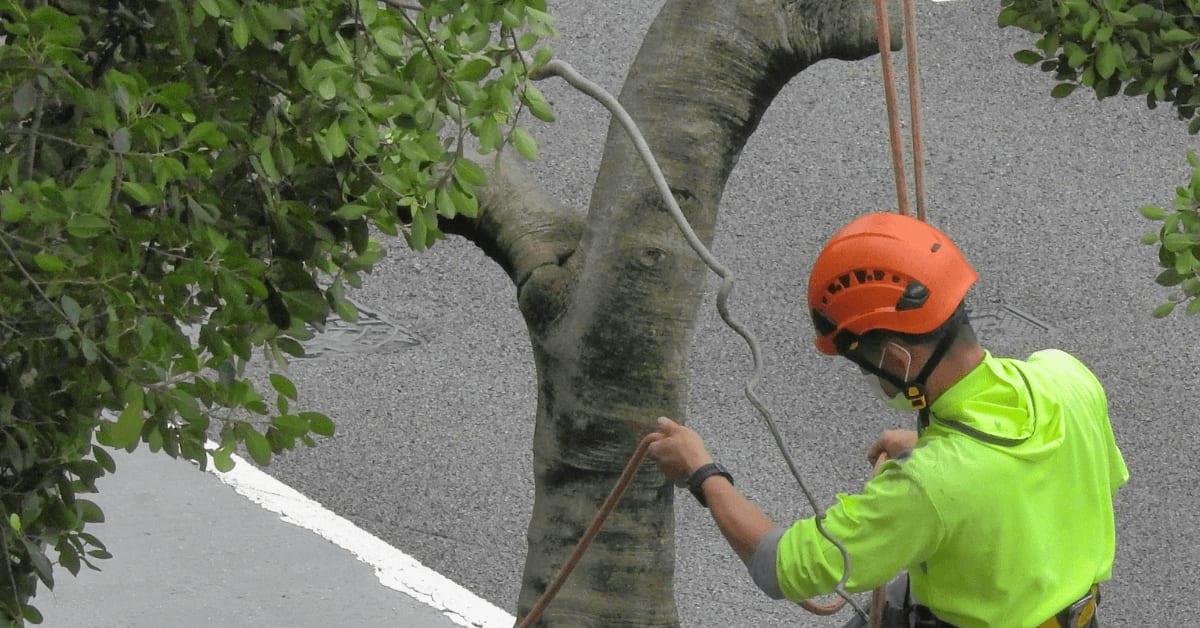
Hiring a professional & certified arborist for tree care in Union County will assist the property owners in maintaining healthy, safe, and well-structured trees. Our arborist team at New Jersey Tree Professionals follows the standards set by the International Society of Arboriculture (ISA) and Tree Care Industry Association (TCIA). We invest in ongoing safety training, equipment upgrades, and industry best practices to deliver expert tree care focused on long-term tree health, risk reduction, and preservation, not just short-term fixes. Our certified arborists offer detailed tree health assessments, preservation planning, and risk evaluations to support residential and commercial properties across Union, Elizabeth, Linden, Roselle, and surrounding neighborhoods. Our goal is to protect your trees, your property, and the long-term value of your landscape. Call us today for a free, professional estimate.
Frequently Asked Questions About Arborist Tree Care in Union, New Jersey
How does an arborist know if my tree is structurally sound?
Arborists use visual inspections to identify defects like included bark and can use advanced tools to check for internal rot that isn’t visible from the outside.
Is trimming my trees necessary for storm prep in Union NJ?
Yes. Strategic pruning reduces the wind load on the tree, making it much less likely to fall or lose large limbs during high-wind events.
What is a certified arborist?
A certified arborist has passed rigorous exams on tree biology, physics, and safety, ensuring they prune for the long-term health and structural integrity of the tree rather than just aesthetics.
Will thinning my tree’s canopy really help it survive a storm?
Absolutely. Proper thinning reduces the sail effect, allowing wind to pass through the tree and significantly reducing the strain on the trunk and root system.
Are you licensed and insured for work in Union County?
Yes, we are fully licensed and insured to protect our crew and your property during every phase of the project.
How often should I have my trees inspected?
In New Jersey, an annual or biennial inspection is recommended, ideally before the summer storm season or the weight of winter snow and ice.
Can an arborist help me get a tree removal permit in Union, New Jersey?
Yes. If a tree is hazardous, an arborist can provide the necessary technical report required by many Union County municipalities to secure a removal permit.
What are the signs of root failure?
Signs include soil heaving or cracking at the base, the appearance of mushrooms (fungal bodies) near the roots, or a sudden lean in the tree’s posture.
Summary Checklist: When to Call for Removal
| Condition | Risk Level | Recommended Action |
|---|---|---|
| Sudden Leaning | Critical | Request immediate emergency assessment, as root or structural failure may already be underway |
| Large Trunk Cracks | High | Arrange a professional inspection promptly to evaluate structural stability and failure risk |
| Mushrooms or Fungus at the Base | Moderate to High | Inspect for root decay or internal structural deterioration before conditions worsen |
| Dead or Bare Branches | Varies | Have an arborist determine whether corrective pruning or full removal is the safest option |
| Overhanging Power Lines | High | Use qualified utility line-clearance professionals for safe evaluation and pruning |
Final Advice
If you notice any of these warning signs, do not wait for a storm to force the issue. Taking proactive measures is the most effective way to prevent catastrophic damage during high-wind events or winter storms. Subtle indicators like internal rot, trunk cavities, or root heave often go unnoticed by the untrained eye until it is too late. Ensuring that a hazardous specimen is managed before it fails protects not only the structural integrity of nearby buildings but also the safety of everyone on the premises. Modern removal techniques allow for the dismantling of even the most massive trees without causing secondary damage to the surrounding landscape or underground utilities.
Delaying a necessary removal often leads to increased complexity and higher costs once the tree becomes too unstable to climb safely. Homeowners should regularly scan their canopy for changes in leaf density or the sudden appearance of deadwood, as these are often the first signs of a deeper biological struggle. Maintaining a safe distance between heavy limbs and power lines or rooflines is a fundamental aspect of responsible property management in New Jersey. By prioritizing structural stability and addressing hazards early, you ensure the long-term resilience and value of your outdoor space. Safety should always be the primary concern when dealing with large-scale vegetation in high-risk weather zones. A reliable licensed arborist tree service firm in Union, New Jersey can assist you in determining if the tree can be saved through specialized care or if it must be removed to protect your property. For expert service, call New Jersey Tree Professional.