Key Takeaways
- Trees touching power lines or leaning toward structures are immediate emergencies.
- Structural cracks and heaving soil indicate a high risk of total tree failure.
- Post-storm inspections are vital in Essex County due to aging silver maples and oaks.
- Attempting DIY emergency removal is extremely dangerous due to unpredictable tension.
- 24/7 professional response prevents secondary property damage and insurance complications.
The homeowners in Essex County, New Jersey, take great pride in the lush, mature canopies that define neighborhoods from Montclair to Millburn. However, the same majestic oaks and maples that provide shade and value can quickly transform into significant liabilities. In Northern New Jersey, the combination of aging tree populations, dense residential layouts, and volatile weather patterns, including Nor’easters and summer thunderstorms, makes emergency tree situations a reality for many. Knowing exactly when a tree has crossed the line from a maintenance issue to a life-safety crisis is the most important knowledge a property owner can possess.
Defining a True Tree Emergency
Not every fallen branch constitutes an emergency, but certain signs indicate that a tree is no longer structurally sound. In the world of arboriculture, an emergency is defined by two factors: the probability of failure and the presence of a target. A target is anything the tree could hit: your home, a neighbor’s property, a car, or a public sidewalk.
If a tree is leaning at a forty-five-degree angle in an open field, it may not be an emergency. However, if that same tree is leaning toward a power line or a bedroom window in Newark or West Orange, it is a critical emergency. The urgency stems from the fact that once a tree’s structural integrity is compromised, it can fail at any moment, regardless of whether the wind is blowing.
Signs of Imminent Trunk Failure
One of the most terrifying emergencies is a trunk that is actively splitting. Homeowners should look for deep, vertical cracks that go through the bark and into the wood of the tree. If you can see daylight through a crack in the trunk, or if two major codominant stems are pulling apart at the crotch of the tree, the structural hinge has failed.
In Essex County, we often see this in older Silver Maples. These trees grow quickly but have brittle wood. During high winds, the stress on these cracks can cause the tree to split in half. If you hear popping or creaking sounds coming from a tree during a storm, or if you see fresh wood exposed in a crack, do not wait. This is a sign that the fibers are snapping under tension.
Uprooting and Soil Heaving
While the trunk may look solid, the root system is the foundation of the tree. In the rocky and sometimes clay-heavy soils of North Jersey, heavy rains can saturate the ground to the point of liquification. When the soil loses its grip on the root plate, the tree begins to tip.
The most tell-tale sign of an uprooting emergency is heaving soil. If the ground on the side opposite the lean is lifting, or if you see roots breaking through the turf, the tree is mid-fall. This process can be slow, taking days, or it can happen in a heartbeat. In suburban areas like Bloomfield or Nutley, where houses are close together, a tipping tree can strike multiple properties. Any sign of soil movement at the base of a tree is a reason to call for professional intervention immediately.
Electrical Hazards and Public Safety
Trees and power lines are a deadly combination. In Essex County, many older neighborhoods have overhead utility lines woven through mature tree canopies. If a branch is resting on a power line, or if a tree has fallen and pulled a wire taut, do not approach the area.
This is a multi-agency emergency. You must contact your utility provider (such as PSE&G) and a professional tree service. Water in the tree’s limbs conducts electricity, and the ground around a downed wire can be energized. Professional emergency tree crews are trained in line clearance and work alongside utility companies to safely remove the wood without causing further electrical fires or fatalities.
Assessing Storm Damage: The Hanger Threat
After a major North Jersey storm, the danger isn’t always on the ground. Hangers or widow-makers are large branches that have snapped but are still lodged high in the canopy. A slight breeze or even the weight of a bird can cause these heavy limbs to plummet.
Because these branches are under tension and held up by unpredictable friction, they are incredibly dangerous to remove. Emergency crews use bucket trucks and specialized rigging to secure these limbs and lower them safely. If you have large debris suspended over your driveway, walkway, or roof, the area should be cordoned off until a professional can clear the canopy.
Why DIY Emergency Removal is a Fatal Mistake
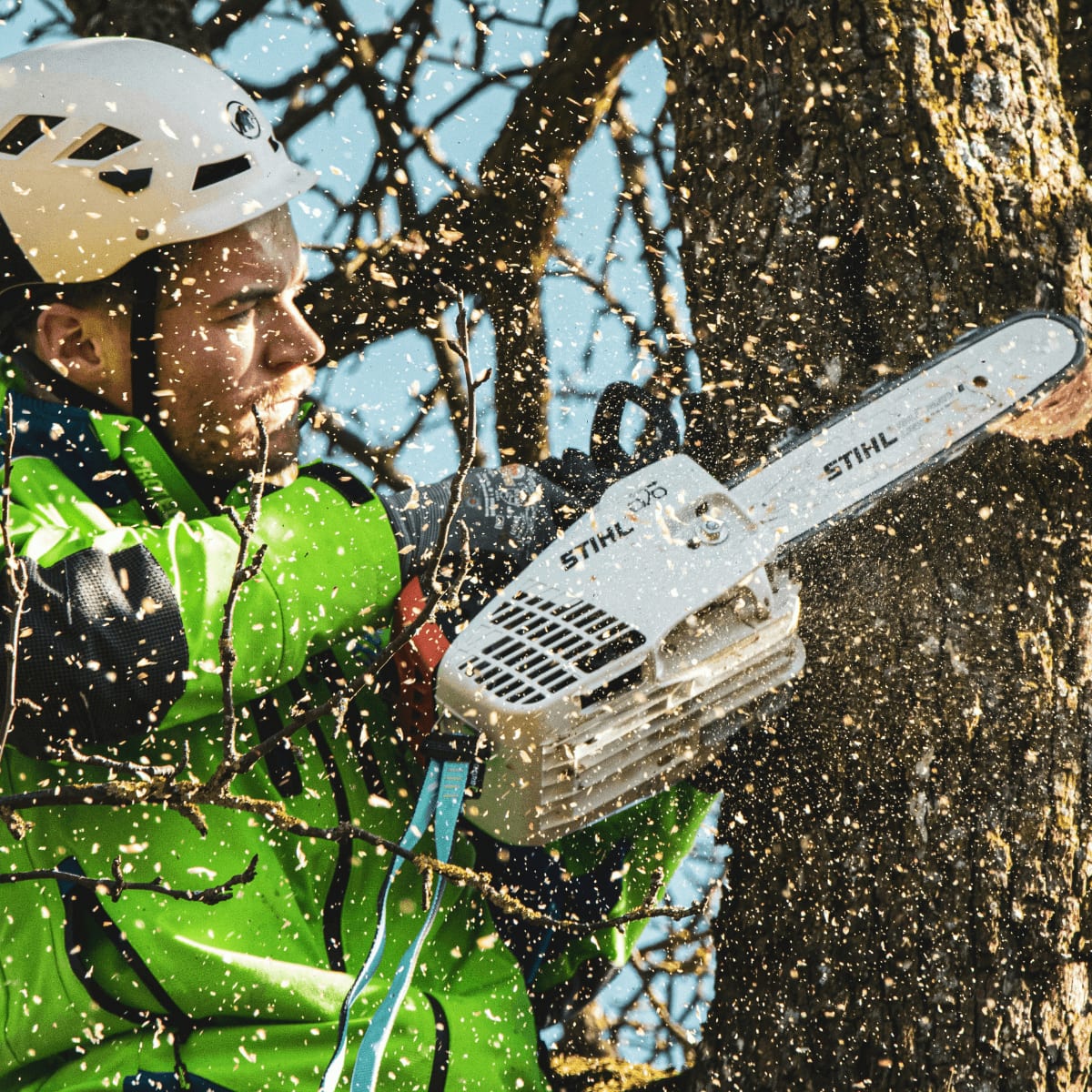
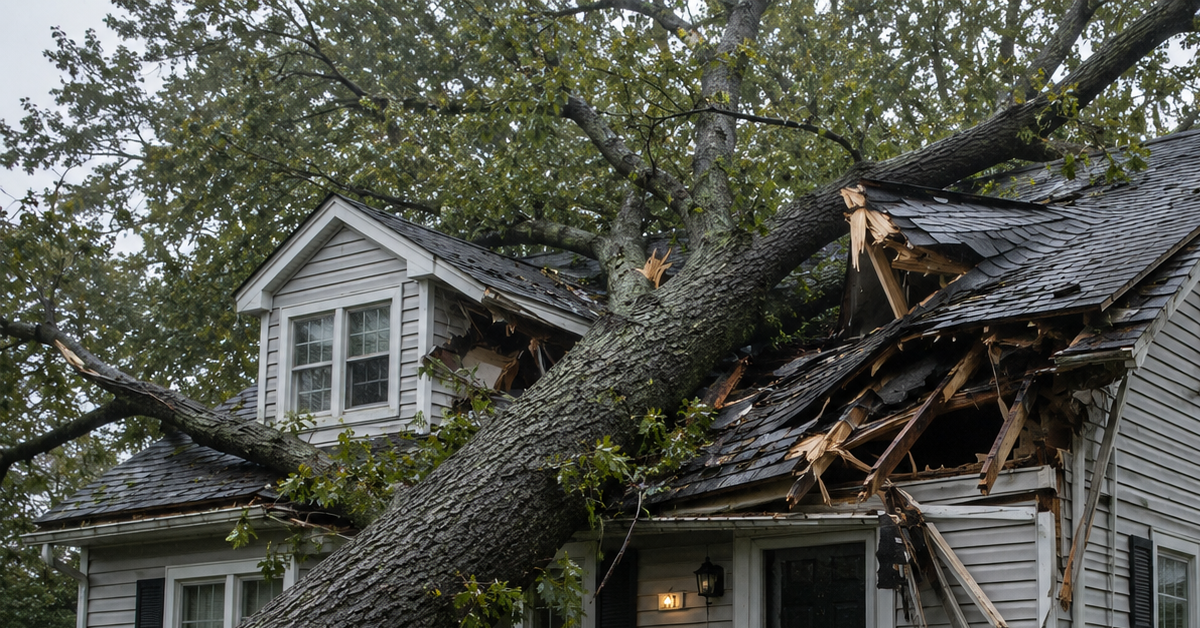
When a tree falls on a house or blocks a driveway, the instinct is to grab a chainsaw and start cutting. This is how many secondary accidents occur. Trees involved in emergencies are often under extreme tension or compression.
When you cut a limb that is supporting the weight of a fallen trunk, the tree can kick back or shift violently. Professionals use compression cuts and tension releases to manage the stored energy in the wood. Furthermore, if a tree is leaning against a structure, removing the wrong branch can cause the entire trunk to slide further into the house, causing more damage than the initial fall.
The Role of Professional Equipment
Emergency tree removal in a dense county like Essex often requires more than just a saw. It requires cranes. A crane allows a crew to lift a multi-ton trunk vertically off a rooftop without putting any additional pressure on the shingles or rafters. Standard tree services may not have 24/7 access to crane operators or high-reach buckets. An emergency specialist, however, maintains a fleet designed for rapid deployment. This ensures that the hazard is neutralized quickly, allowing for temporary roof repairs to begin and preventing further water damage from rain.
When a tree crisis strikes in Essex County, you need a team that understands the local terrain and the urgency of the situation. New Jersey Tree Professional provides elite, 24/7 emergency tree removal services to homeowners and businesses throughout the region. Our crews are highly trained in hazardous removals, utilizing advanced rigging and heavy machinery to secure your property safely and efficiently. At New Jersey Tree Professional, we offer a wide range of tree services such as tree removal, tree trimming & pruning, stump grinding & removal, and emergency tree service.
We prioritize rapid response times because we know that in an emergency, every minute counts toward preventing further damage. Fully licensed and insured, New Jersey Tree Professional works closely with insurance companies to document damage and streamline the claims process for our clients. Whether it’s a fallen oak on your roof or a leaning pine threatening a power line, we bring decades of experience to every high-risk job.
Don’t risk your safety with an amateur. Trust the professionals who New Jersey relies on. Call our team at (908) 866-8894. New Jersey Tree Professional is committed to honest pricing, expert cleanup, and the total restoration of your property’s safety.
Frequently Asked Questions by Homeowners in Essex County, NJ
What qualifies as a tree emergency in Essex County, New Jersey?
An emergency is any tree that is leaning toward a structure, touching power lines, actively splitting, or showing heaving soil at its base.
Is a fallen branch on the ground an emergency?
Usually no. If the branch is on the lawn and not blocking access or resting on a structure, it can be handled during normal business hours.
Should I call my insurance company before the tree is removed in Essex County, NJ?
You should call your insurance to start the claim, but in a true emergency (tree on a house), you are expected to take mitigating action to prevent further damage. Most insurance companies approve the immediate removal of the hazard.
Can a tree be saved if it starts to lean?
If the lean is caused by root failure (heaving soil), the tree usually cannot be saved. If the lean is due to phototropism (growing toward light), it may be stable but should be assessed.
How much does emergency tree removal cost in Essex County, New Jersey?
Emergency rates are higher than scheduled maintenance due to the 24/7 deployment and the increased risk and equipment required. We provide clear, upfront estimates.
What if the tree is on a power line?
Stay at least 35 feet away and call your utility company and a professional tree service. Never attempt to touch the tree or anything in contact with the wire.
How quickly can a crew arrive in Essex County, NJ?
Emergency crews typically aim for a 1–4 hour response time, depending on the weather conditions and the volume of local calls.
Does New Jersey Tree Professional handle crane removals in Essex County, NJ?
Yes, we utilize cranes for large-scale emergencies to lift heavy trunks safely off buildings without causing additional structural damage.
Summary Checklist: When to Call for Removal
| Condition | Risk Level | Recommended Action |
|---|---|---|
| Tree resting on a structure | Critical | Treat as an emergency hazard and arrange immediate professional removal using appropriate equipment |
| Soil heaving or exposed roots | High | Restrict access around the area and request urgent structural stability assessment |
| Deep vertical trunk cracks | High | Keep clear of the hazard zone and arrange urgent professional evaluation for structural failure risk |
| Large hanging branch in the canopy | Moderate to High | Use professional hazard removal to prevent sudden or unpredictable branch failure |
| Branches touching power lines | Critical | Stay clear, avoid any contact, and notify the utility provider immediately due to severe electrical danger |
Final Advice
When dealing with potential tree emergencies in Essex County, the most important rule is to trust your instincts. If a tree looks or sounds different from the way it did yesterday, it is likely undergoing a structural shift. The combination of North Jersey’s heavy snow, ice, and saturating rains means our trees are under constant environmental stress. Always prioritize human safety over property; if a large tree is leaning toward your home during a storm, move to a different part of the house or stay with a neighbor until the situation is assessed. Document the damage with photos from a safe distance for your insurance provider, but never attempt to climb or cut a compromised tree yourself.
A professional arborist has the specialized tools to stabilize a hazard that might otherwise result in a catastrophe. By acting quickly when you see signs of root failure or trunk splitting, you can prevent a difficult situation from becoming a total loss. Remember, the cost of emergency removal is always lower than the cost of a major structural repair to your home. Stay vigilant, keep your trees maintained, and never hesitate to call in the experts when a tree’s stability is in question.